Sunday, May 10, 2009

Avichi


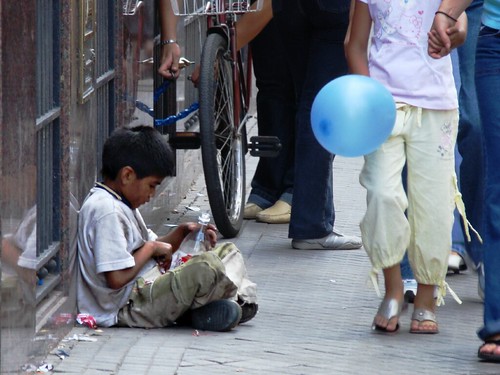
Or Hell as the Christians call it ...............................is right here on earth

It is not a place per se

It is a state of experience

Not in some inferno somewhere up in the skies or down wherever you have been told it is

But right where you are now

What you experience can indeed be hell

Take on board the idea that life can be very tough indeed

Our tough life experiences are often hell

Can be hell to live through as well

Hell does not have to be a feeling of isolation although yes it can be so

Hell is where we have to live every moment of it and try to find a way out

Sometimes we cannot as our karma demands that we live through horrible experiences

And yes these can last weeks, months and years

And yes we can shorten them or positively influence them through our behavior and actions

So determine that whatever comes your way you will put a positive twist on it

All of us have what we need to grow our consciousness at every given second in our lives

Not what we might want or choose

But what we need
.
And growing our consciousness is why we are here

When we die we review our lives in detail and see clearly where we did well or badly

Depending on how we have done we go for a shorter or longer rest period to heaven as some call it

This period lasts according to our merits or brownie points earned during this life

Yes this is the heaven of Christians although they have distorted it from reality there's is an approximation and no it is certainly not for ever and ever

Devachan is what the Buddhists call it and yes this is a more accurate description of the state
.
After this rest period in devachan or heaven down we come again to enter a new life

A new life where before starting it we agree that we want to come and also understand what our major lessons are to be

No we do not remember this once we incarnate

The whole point of each manifestation is that when we enter life we are the some total of all our previous lives

Not in memories

But in terms of our accumulated positive values and evolutionary traits
.
The negative accumulations we pay off our karma in lessons, which are often hard ones
.
We can observe this in how some people are always in trouble while others seemingly float through life
.
We can also observe how some seem to know nothing about life while others know exactly what they are doing
.
This can be seen clearly in some who show a natural talent for music, painting, technology whatever

In still others who know about life, they are more conscious, older souls if you will

Who have a familiarity with a place, people or things
.
Generally these people like to share and are generous
.
Others exhibit ongoing selfishness and greediness
.
These are young souls
.
To be pitied not envied because they will pay for every gram of pain or selfishness that they have inflicted on others in their very own avichi experiences
.
Others who show compassion and understanding are more advanced souls and lead lives of service, being the best they can every day in whatever comes their way
.
The whole point of each life is to move towards altruism
.
Away from selfishness
.
So all of us experience hell in various lives
.
Once you begin to see this then you can choose to move on
.
Determine to make your next life a better more interesting one
.
Only you can do this
.
Only you can change your karma
.
You alone are responsible
.
Yes this is how it really works
.
Your choice and should you decide to ignore this then no worries you will just come back again in your next life and live it all over again
.
Until you do learn your lessons
.
Avichi is right here and now
.
Hell on earth you might call it

Saturday, May 09, 2009

Climate and you


Academics meeting in Bristol recently for Britain's first conference on the psychology of climate change argued that the greatest obstacles to action are not technical, economic or political

They are the denial strategies that we adopt to protect ourselves from unwelcome information.

Nearly 80% of people claim to be concerned about climate change, but many people have a tendency to define this concern in ways that keep it far away.

They describe climate change as a global problem (not a local one) and as a future problem (not one for their lifetimes).

And 60% of people believe that "many scientific experts still question if humans are contributing to climate change" while 30% believe climate change is "largely down to natural causes".

Seven per cent deny climate is changing at all.

The exact percentages are not the point

The point is not even pushing it away

It is our perceived powerlessness

Powerlessness to change anything

Powerlessness to influence

This perception flavours everything we do

Time to recognise that collectively we can influence

Can change things

Apathy never changed anything

So start with yourself

Make that effort, sign that paper

Go to that website

Write that letter

Sign the petition

Be clear you do not like lies

Lies about climate change for a start

The climate has always changed

Will always change, everything in nature changes

Everything evolves

Inform yourself about the truth

Then you can be clear

Then you can act

Because when you know the truth of things your psychology changes as well
It can move beyond denial to a more proactive position
To the point where you accept that we are all involved
And that we all make a difference however local this might be

Friday, May 08, 2009

Ants


King Solomon saw ants as models of wisdom; the Dogon people of west Africa believe they were the mothers of the first humans; they attained movie-star status in the 1998 films “Antz” and “A Bug’s Life”.

Laurent Keller, a professor of ecology at the University of Lausanne, and Elisabeth Gordon, shed light on how these extraordinarily complex creatures operate and what we can learn from them.

Over the past 150m years ants have evolved into around 13,000 species: 772 in America, 50 in Britain and 1,250 in Australia.

Myrmecologists (ant specialists) are certain that thousands more are yet to be discovered.

From tiny leptanilline ants that look like a dusting of pepper to Australia’s 5cm (2-inch) bulldog ants, the weight of the Formicidae family is equal to that of the world’s population of humans and accounts for 10% of the biomass of all the creatures on the planet.

The global ant population is estimated at 10,000 trillion, greatly outnumbering any other sort of animal.

And the density of ant colonies can be astronomical: a “super-colony” of redwood ants discovered in the 1970s on the coast of the Japanese island of Hokkaido had more than 300m worker ants, over 1m queens and covered an area of 2.5 square kilometres.
document.write('');

Mr Keller and Ms Gordon explain that the success of ants as a species lies in their sophisticated, strictly hierarchical social organisations.

Ant colonies are founded on two main “castes” of ant: queens, whose sole function is reproduction, and their industrious, sterile, worker daughters. (The only use for males is to inseminate the queen; afterwards they are either driven out of the nest or killed.)

Colonies operate through organised co-operation and task-sharing.

Ants work together to capture prey that is bigger than they are; they can call up extra workers when an abundant food source is discovered; they can defend a colony by repelling invaders.

Weaver ants use silk squeezed from ant larvae to “glue” leaves together for nest building. Nursemaid ants look after eggs, larvae and pupae, moving them from place to place each day depending on the temperature.

Ants of Switzerland’s Jura region search out antibacterial spruce resin and distribute it within their nests to reduce the number of pathogens.

The secret behind such organised societies is communication through the use of around 20 pheromones, emitted by ants’ secretory organs.

These chemical signals are used, among other things, by queens to attract males; for marking territory; to alert nest-mates to danger; to lead other ants to a source of food; and to tell them which ants are dying and need removing from the colony.

This pheromone-driven behaviour means that although single ants are not clever, collectively they are capable of complex tasks.

Such “swarm intelligence” is of huge interest to scientists and has already led to practical applications.

Unilever, for instance, has used a computer program based on swarm intelligence to organise movements between storage tanks, mixers and packing lines in one of its factories.


The Economist

Thursday, May 07, 2009

Wolf wolf


Many countries have stories about the little boy who shouted wolf wolf

Essentially the story is about the dangers of raising false alarms

And how after a while people stopped taking him seriously

Today many organisations are crying wolf wolf with increasing frequency

Some are doing so because it is their job to sound the alarm when things reach a certain point

Others to promote or hide selfish interests
.
Some are doing so to protect themselves from law suites or criticism

Others are doing so because they are panicking

Many others are crying wolf because they have not fully understood what is happening

Then along come the media who often uncritically print what they have been given

Some through laziness do not even check the validity of these stories

Others accept without checking or thinking about what they are setting in motion

For sure the media love sensational stories because this helps them sell their products

And now the public are steadily losing all faith in the media and those shouting wolf

Not only do so many people assume that they are being misled they have come to expect it

Spin in everything;

More than this even, the media themselves have lost all confidence in their own ability to give us the facts

A media who no longer know the truth themselves, if indeed they ever did

Increasing concentration of the media feeder services means that most of the media are taking their information from the same sources

And when they disseminate this information global communications mean that everyone is reading the same lies at the same time

Over time the endless cries of wolf wolf wear us down

Not nice at all being bombarded night and day with ever more bad news

Even less pleasant being told the end of the world is nigh

Tsunamis

SARS

Mad cow disease

AIDS/HIV

Swine flu

Financial catastrophe

Global warming

Climatic disasters

Yet to come are

New wars

Invasion by UFO's

New little ice age

And where does this lead?

To a point where the public turn off and increasingly ignore the stories of doom and despair being thrust upon them

Wolf wolf

And then along came the real thing

Wednesday, May 06, 2009

Where else should she be


Meaning she will normally be where she should be at any given point in the day or week

Whoever she or he is

Our life patterns dictate our physical location

Tennis players on the courts

Business men in their offices

Mothers taking children to school

You get the picture

Then take it on to lunch time and we all have our patterns there too

Afternoon the same

Evening going home from wherever we worked again our patterns etched in routine and familiarity

Even where we tend to shop, drink or eat have clear patterns

One thought occurs

Is this really your life?

Or are you living your life with fantasies of something else coming along to change it?

For many the only way to handle dreary or boring patterns is the dream of change

Moving somewhere else

Changing the job, winning the lottery

Living a totally different life

Empowered, free

So why do so many never do so?

Fear of change and yet in those fantasies and dreams we welcome change

Habits hold us fast yet in our dreams we let our habits go

Family might also be a deterrent yet in those fantasies we move beyond family

Any number of reasons prevent us from realising our dreams and fantasies

And so it drags on to our retirement days

Thought we had something more to say

What a shame was that all your life was?

A dream of other things to be done and lived

It is never too late to move into a life of change

Not for the sake of change

For the feeling of living life in a more powerful way

Daring to go where you have never been

Will you embrace change or will fear hold you fast?

Where else should she be indeed!

Tuesday, May 05, 2009

How to protect yourself from swine flu virus


Should You Accept a Flu Vaccine -- Just to be Safe?
.
Getting vaccinated now would not only offer no protection and potentially cause great harm, it would most likely be loaded with toxic mercury which is used as a preservative in most flu vaccines..
.
So no matter what you hear -- even if it comes from your doctor -- think twice before getting a regular flu shot.
.
They rarely work against seasonal flu...and certainly can't offer protection against a never-before- seen strain.
.
So how to protect yourself without dangerous drugs and vaccinations then?
.
There are always going to be threats of flu pandemics, real or created, and there will always be potentially toxic vaccines that are peddled as the solution.
.
But you can break free of that whole drug-solution trap by following some natural health principles.
.
Keep your immune system in optimal working order so that you're far less likely to acquire the infection to begin with.
.
Optimize your vitamin D levels. optimizing your vitamin D levels is one of the absolute best strategies for avoiding infections of all kinds, and vitamin D deficiency is likely the true culprit behind the seasonality of the flu -- not the flu virus itself.
.
This is probably the single most important and least expensive action you can take.
.
If you are coming down with flu like symptoms and have not been on vitamin D you can take doses of 50,000 units a day for three days to treat the acute infection.
.
Some researchers believe the dose could even be as high as 1000 units per pound of body weight for three days.
.
Avoid sugar and processed foods.
.
Sugar decreases the function of your immune system almost immediately, and as you probably know, a strong immune system is key to fighting off viruses and other illness.
.
Be aware that sugar is present in foods you may not suspect, like ketchup and fruit juice.
.
Get enough rest. because if your body is overly fatigued it will be harder for it to fight the flu.
.
We all face some stress everyday, but if stress becomes overwhelming then your body will be less able to fight off the flu and other illness.
.
When you exercise, you increase your circulation and your blood flow throughout your body.
.
The components of your immune system are also better circulated, which means your immune system has a better chance of finding an illness before it spreads.
.
Take a good source of animal based omega-3 fats like Krill Oil.
.
It is also important to avoid damaged omega-6 oils that are trans fats found in processed foods
.
Wash Your Hands.
.
Washing your hands will decrease your likelihood of spreading a virus to your nose, mouth or other people.
.
Be sure you don't use antibacterial soap for this as they are completely unnecessary, and they cause far more harm than good.
.
Instead, identify a simple chemical-free soap
.
Provided you do not have problems with your liver or pancreas eat garlic regularly as garlic works like a broad-spectrum antibiotic against bacteria, virus, and protozoa in the body.
.
Unlike antibiotics, no resistance can be built up so it is an absolutely safe product to use, but if you do no like garlic then leave it alone!
.
Avoid hospitals and vaccines
.
In this particular case, stay away from hospitals unless you're having an emergency, as hospitals are prime breeding grounds for infections of all kinds, and could be one of the likeliest places you could be exposed to this new bug.
.
Having a positive outlook helps keep fear at bay
.
And this has to be helpful
.
Love life and help others because you want to
.
This last one might seem a bit obscure but think why do some go down with diseases and others not?
.
No it is not just luck!

Monday, May 04, 2009

Tamiflu and you


There is lots of fear mongering being promoted around the world at the moment
.
And I suspect many of you have been alarmed by the media's coverage of the swine flu scare.
.
But this is not the first swine flu panic
.
The last time was in 1976 in the US and it resulted in a massive swine flu vaccine campaign
.
And for those of you who know nothing about this
.
Within a few months, claims totaling $1.3 billion had been filed by victims who had suffered paralysis from the vaccine.
.
The vaccine was also blamed for 25 deaths.
.
In addition, several hundred people developed crippling Guillain-BarréSyndrome after they were injected with the swine flu vaccine.
.
Even healthy 20-year-olds ended up as paraplegics.
.
And the swine flu pandemic itself?
.
It never materialized.
.
More people died from the swine flu vaccine than swine flu!
.
Your fear will make some people very rich in today's difficult economy
.
According to the Associated Press at least one financial analyst estimates up to $388 million worth of Tamiflu sales in the near future and that's without a pandemic outbreak.
.
More than half a dozen pharmaceutical companies, including Gilead Sciences Inc., Roche, Glaxo Smith Kline and other companies with a stake in flu treatments and detection, have seen a rise in their shares in a matter of days, and will likely see revenue boosts if the swine flu outbreak continues to spread.
.
As soon as Homeland Security in the US declared a health emergency, 25 percent-- about 12 million doses -- of Tamiflu and Relenza treatment courses were released from the nation's stockpile
.
So now lets look at Tamiflu
.
Tamiflu went through a difficult time not too long ago, as the dangers of this drug came to light
.
In 2007, the American FDA finally began investigating some 1,800 adverse event reports related to the drug.
.
Common side effects of Tamiflu include:
.
Nausea
.
Vomiting
.
Diarrhea
.
Headache
.
Dizziness
.
Fatigue
.
Cough
.
All in all, these are the very symptoms you're trying to avoid!
.
More serious symptoms included convulsions, delirium or delusions, and 14 deaths in children and teens as a result of neuropsychiatric problems and brain infections
.
Japan banned Tamiflu for children in 2007
.
And this is for a drug that, when used as directed,only reduces the duration of influenza symptoms by 1 to 1 ½ days according to the official data.
.
But making matters worse, some patients with influenza are at higher risk for secondary bacterial infections when on Tamiflu.
.
And secondary bacterial infections, were most likely the real cause of the mass fatalities during the 1918 pandemic!
.
Currently, the antiviral drugs Tamiflu and Relenza are the only drugs that appear effective against the (human flu) H1N1 virus, and taking Tamiflu to protect yourself against this new virus could be a serious mistake -- for all the reasons already mentioned above.
.
But in addition to the dangerous side effects of Tamiflu, there is also growing evidence of resistance against the drug.
.
In February, the pre-publication and preliminary findings journal called Nature Proceedings published a paper on this concern, stating
.
The dramatic rise of oseltamivir [Tamiflu] resistance in the H1N1serotype in the 2007/2008 season and the fixing of H274Y in the2008/2009 season has raised concerns regarding individuals at risk for seasonal influenza, as well as development of similar resistance in the H5N1 serotype [bird flu].
.
Previously, oseltamivir resistance produced changes in H1N1 and H3N2 at multiple positions in treated patients.
.
In contrast, the recently reported resistance involved patients who had not recently taken oseltamivir.
.
It's one more reason not to bother with this potentially dangerous drug.
.
There are always going to be threats of flu pandemics, real or created, and there will always be potentially toxic vaccines that are peddled as the solution.
.
But you can break free of that whole mythical drug solution trap by following some natural health principles
.
And these I outline in our blog tomorrow

Sunday, May 03, 2009

The swine flu virus


Health officials across the world fear this could be the leading edge of a global pandemic emerging from Mexico, where seven people are confirmed dead as a result of the new virus.
.
On Monday April 27th, the World Health Organization (WHO) raised its pandemic alert level to four and then five on its six-level threat scale, which means they've determined that the virus is capable of human-to-human transmission.
.
The initial outbreaks across the planet reveal an infection already traveling at higher velocity than did the last official pandemic strain, the 1968 Hong Kong flu.
.
The number of fatalities, and suspected and confirmed cases across the world change depending on the source, so your best bet -- if you want the latest numbers -- is to use Google Maps' Swine Flu Tracker.
.
Several nations have imposed travel bans, or made plans to quarantine air travelers that present symptoms of the swine flu, such as:
.
Fever of more than 100
.
Coughing
.
Runny nose and/or sore throat
.
Joint aches
.
Severe headache
.
Vomiting and/or diarrhea
.
Lethargy
.
Lack of appetite
.
Top global flu experts are trying to predict how dangerous the new swine flu strain will be, as it became clear that they had little information about Mexico's outbreak.
.
It is as yet unclear how many cases occurred in the month or so before the outbreak was detected.
.
It's also unknown whether the virus was mutating to be more lethal, or less.
..
One thing is clear though most people have likely been alarmed by the media's coverage of the swine flu scare.
.
It is very difficult to forecast a pandemic, and a rash response can be extremely damaging.
.
To put things into perspective, malaria kills 3,000 people every day,and it's considered "a health problem"
.
But of course, there are no vaccines for malaria that can take in billions of dollars in a short amount of time.
.
So what is the swine flu?
.
Regular swine flu is a contagious respiratory disease, caused by a type-A influenza virus that affects pigs.
.
The current strain, A(H1N1), is a new variation of an H1N1 virus -- which causes seasonal flu outbreaks in humans -- that also contains genetic material of bird and pig versions of the flu.
.
Interestingly enough, this version has never before been seen in either human or animals
.
All H1N1 flu's are descendants of the 1918 pandemic strain and have mutated many times since then
.
This is the reason why flu shots may or may not work in any given year because of these mutations.
.
Therefore, there's no vaccine available for this current hybrid flu strain, and naturally,this is feeding the fear that millions of people will die before a vaccine can be made.
.
However, there is one very important fact here.
.
Just a couple of months ago, scientists concluded that the 1918 flu pandemic that killed between 50-100 million people worldwide in a matter of 18 months -- which all these current worst case scenarios are built upon -- was not due to the flu itself!
.
Instead, they discovered the real culprit was strep infections.
.
People with influenza often get what is known as a "super infection"with a bacterial agent.
.
In 1918 it appears to have been streptococcus pneumoniae.
.
Since strep is much easier to treat than the flu using modern medicine, a new pandemic would likely be much less dire than it was in the early 20th century, the researchers concluded.
.
Others, such as evolutionary biologist Paul Ewald, claim that a pandemic of this sort simply cannot happen, because in order for it to occur, the world has to change.
.
Not the virus itself, but the world.
.
In a previous interview for Esquire magazine, in which he discusses the possibility of a bird flu pandemic, he states:
.
They think that if a virus mutates, it's an evolutionary event.
.
Well, the virus is mutating because that is what viruses and other pathogens do.
.
But evolution is not just random mutation.
.
It is random mutation coupled with natural selection; it is a battle for competitive advantage among different strains generated by random mutation.
.
For bird flu to evolve into a human pandemic, the strain that finds a home in humanity has to be a strain that is both highly virulent and highly transmissible.
.
Deadliness has to translate somehow into popularity;
.
H5N1 has to find a way to kill or immobilize its human hosts, and still find other hosts to infect.
.
Usually that doesn't happen
.
Ewald goes on to explain that evolution in general is all about trade-offs, and in the evolution of infections the trade-off is between virulence and transmissibility.
.
What this means is that in order for a "bird flu" or "swine flu" to turn into a human pandemic, it has to find an environment that favors both deadly virulence and ease of transmission.
..
People living in squalor on the Western Front at the end of World War I generated such an environment, from which the epidemic of 1918 could arise.
.
Likewise, crowded chicken farms, slaughter houses, and jam-packed markets of eastern Asia provide another such environment, and that environment gave rise to the bird flu -- a pathogen that both kills and spreads, in birds, but not in humans.
.
We know that H5N1 is well adapted to birds.
.
We also know that it has a hard time becoming a virus that can move from person to person.
.
It has a hard time without our doing anything.
.
But we can make it harder.
.
We can make sure it has no human population in which to evolve transmissibility.
.
There is no need to rely on the mass extermination of chickens or swine
.
There is no need to stockpile vaccines for everyone.
.
By vaccinating just the people most at risk -- the people who work with chickens, swine and the care givers -- we can prevent it from becoming transmissible among humans.
.
Then it doesn't matter what it does in chickens or swine
.
Remember also that, despite the fantastic headlines and projections of millions of deaths, the H5N1 bird flu virus killed a mere 257people worldwide since late 2003.
.
As unfortunate as those deaths are,257 deaths worldwide from any disease, over the course of five years, simply does not constitute an emergency worthy of much attention, let alone fear!
.
Your risk of being killed by a lightning strike in the last five years was about 2,300 percent higher than your risk of contracting and dying from the bird flu.
.
In just one year (2004), more than 1,170 people died from lighting strikes,worldwide
.
So please, as the numbers of confirmed swine flu cases are released,keep a level head and don't let fear run away with your brains.
.
And if you need a good worry then yes we are overdue a pandemic however this swine flu does not look like it

Saturday, May 02, 2009

Mattresses and you


Although good mattresses are expensive, they are surely worth it for health and happiness, even if it means making savings elsewhere.

People often put up with wakeful nights, constant tiredness and sore backs for a long time before connecting it to the mattress
.
A good test is sitting on the edge and seeing whether the whole side of the mattress collapses.
.
If so, the mattress needs urgent replacement.
.
Also, when looking at a new one, remember that quilted ones tend to be of lower quality.
.
Tufted ones, which look like they have buttons going through them, are better as this means the filling is contained to avoid it moving around.

Good stitching around the sides indicates that the springs are contained in pockets, which will be much more effective than open spring mattresses.

But always remember to lie down on a mattress in the showroom and ask for professional advice. Choosing a new mattress is a very important decision indeed

Make sure the bed base is suitable for your mattress.

A poor base will make even the most expensive mattress uncomfortable.

Divan or upholstered ones are best for spring mattresses as the springs in both components complement each other.

Memory foam mattresses are better if you have only a wooden slatted base.

To gauge the right tension for you, lie on the mattress in the showroom, and push your hand under the small of your back.

If there is a large gap, the mattress is too soft, no gap at all, then it's too firm.

Just being able to pass your hand through suggests that the tension is spot on.

If the mattress is too hard, your body will try to compensate by frequently tossing and turning during the night, up to 60 times.

This will impair your and your partner's sleep.

A good mattress will reduce turning to 17 times a night.

A too-hard mattress makes the body do the work, rather than the bed.

The shoulder and hips cannot sink into the mattress, so they curve towards each other, resulting in a bent and stressed spine.

A too-soft mattress lets the body sink into a hammock position, causing hips and shoulders to pinch in, the spine to curve and putting pressure on joints and muscles.

Numbness and tingling can follow.

The best spring mattresses tend to be pocket-sprung, where each individual spring is kept separate to respond to pressure from your body.

Telegraph

So now you know

Friday, May 01, 2009

Stupid


The capacity of a 17-year-old’s working memory who had spent their whole lives in poverty could hold an average of 8.5 items in their memory at any time.
.
Those brought up in a middle-class family could manage 9.4, and those whose economic and social experiences had been mixed were in the middle.
.
These two correlations do not by themselves prove that chronic stress damages the memory, but Dr Evans and Dr Schamberg then applied a statistical technique called hierarchical regression to the results.
.
They were able to use this to remove the effect of allostatic load on the relationship between poverty and memory discovered originally by Dr Farah.
.
When they did so, that relationship disappeared. In other words, the diminution of memory in the poorer members of their study was entirely explained by stress, rather than by any more general aspect of poverty.
.
To confirm this result, the researchers also looked at characteristics such as each participant’s birthweight, his mother’s age when she gave birth, the mother’s level of education and her marital status, all of which differ, on average, between the poor and the middle classes.
.
None of these characteristics had any effect.
.
Nor did a mother’s own stress levels.
.
That stress, and stress alone, is responsible for damaging the working memories of poor children thus looks like a strong hypothesis.
.
It is also backed up by work done on both people and laboratory animals, which shows that stress changes the activity of neurotransmitters, the chemicals that carry signals from one nerve cell to another in the brain.
.
Stress also suppresses the generation of new nerve cells in the brain, and causes the “remodelling” of existing ones.
.
Most significantly of all, it shrinks the volume of the prefrontal cortex and the hippocampus.
.
These are the parts of the brain most closely associated with working memory.
.
Children with stressed lives, then, find it harder to learn.
.
Put pejoratively, they are stupider. It is not surprising that they do less well at school, end up poor as adults and often visit the same circumstances on their own children.
.
Dr Evans’s and Dr Schamberg’s study does not examine the nature of the stress that the children of the poor are exposed to, but it is now well established that poor adults live stressful lives, and not just for the obvious reason that poverty brings uncertainty about the future.
.
The main reason poor people are stressed is that they are at the bottom of the social heap as well as the financial one.
.
Sir Michael Marmot, of University College London, and his intellectual successors have shown repeatedly that people at the bottom of social hierarchies experience much more stress in their daily lives than those at the top—and suffer the consequences in their health.
.
Even quite young children are socially sensitive beings and aware of such things.
.
So, it may not be necessary to look any further than their place in the pecking order to explain what Dr Evans and Dr Schamberg have discovered in their research into the children of the poor.
.
The Bible says, “the poor you will always have with you.” Dr Evans and Dr Schamberg may have provided an important part of the explanation why.


Economist
.
The article certainly explains some of the mechanics but not the true causes
.
Karma and reincarnation might be a better explanation
.
And this will continue for many many years to come
.
Until we reach that far distant day when we have moved away from selfishness and greed
.
And thence the need for people paying their karma for greed and selfishness in previous lives
.
At that time and that time only will there be no more poor people